

There’s something magical about sitting in a chair that held your grandmother, or eating dinner at a table where your parents shared their first meal as newlyweds. Heirloom furniture carries more than functional value – it holds memories, stories, and connections that span generations. In our disposable culture, creating these lasting pieces has become both more challenging and more precious. The concept of heirloom furniture begins with a fundamental understanding that true quality transcends trends. While fashion cycles through styles every few years, exceptional craftsmanship and natural materials possess a timeless quality that remains beautiful across decades. A solid walnut dining table crafted today will look as elegant in 2070 as it does now, while synthetic alternatives from just a decade ago already appear dated. Natural materials age like fine wine, developing character and depth that synthetic alternatives cannot replicate. The patina that develops on well-loved wood surfaces tells stories of countless family dinners, homework sessions, and intimate conversations. These aren’t signs of wear – they’re evidence of a life well-lived and shared. Each mark becomes part of the furniture’s biography, making it more valuable rather than less. The emotional investment in heirloom pieces transforms our relationship with consumption entirely. When you purchase furniture intended to last generations, the decision process becomes profoundly different. You consider not just your current needs, but how the piece might serve your children’s children. This perspective naturally leads to choices that prioritize enduring beauty and exceptional construction over immediate trends. Quality construction techniques separate temporary furniture from lasting heirlooms. Traditional joinery methods like mortise and tenon, dovetail joints, and hand-fitted drawers create connections that actually strengthen over time. These time-tested techniques, combined with solid wood construction, create pieces that can be repaired, refinished, and restored indefinitely. Modern synthetic materials and construction methods simply cannot offer this longevity. The stories embedded in heirloom furniture become part of family folklore. Children grow up hearing about the rocking chair where they were nursed, the desk where their parent wrote love letters, or the bookshelf that traveled across continents. These narratives create emotional connections that transcend monetary value, making each piece irreplaceable in ways that mass-produced alternatives never achieve. Perhaps most importantly, choosing to create heirlooms is an act of faith in the future. It’s a statement that families will continue, that beauty matters across generations, and that quality deserves preservation. In a world increasingly focused on the immediate, heirloom furniture represents hope, continuity, and the belief that some things are worth keeping forever.
Seasonal Living: How Natural Materials Connect Us to Nature’s Rhythms
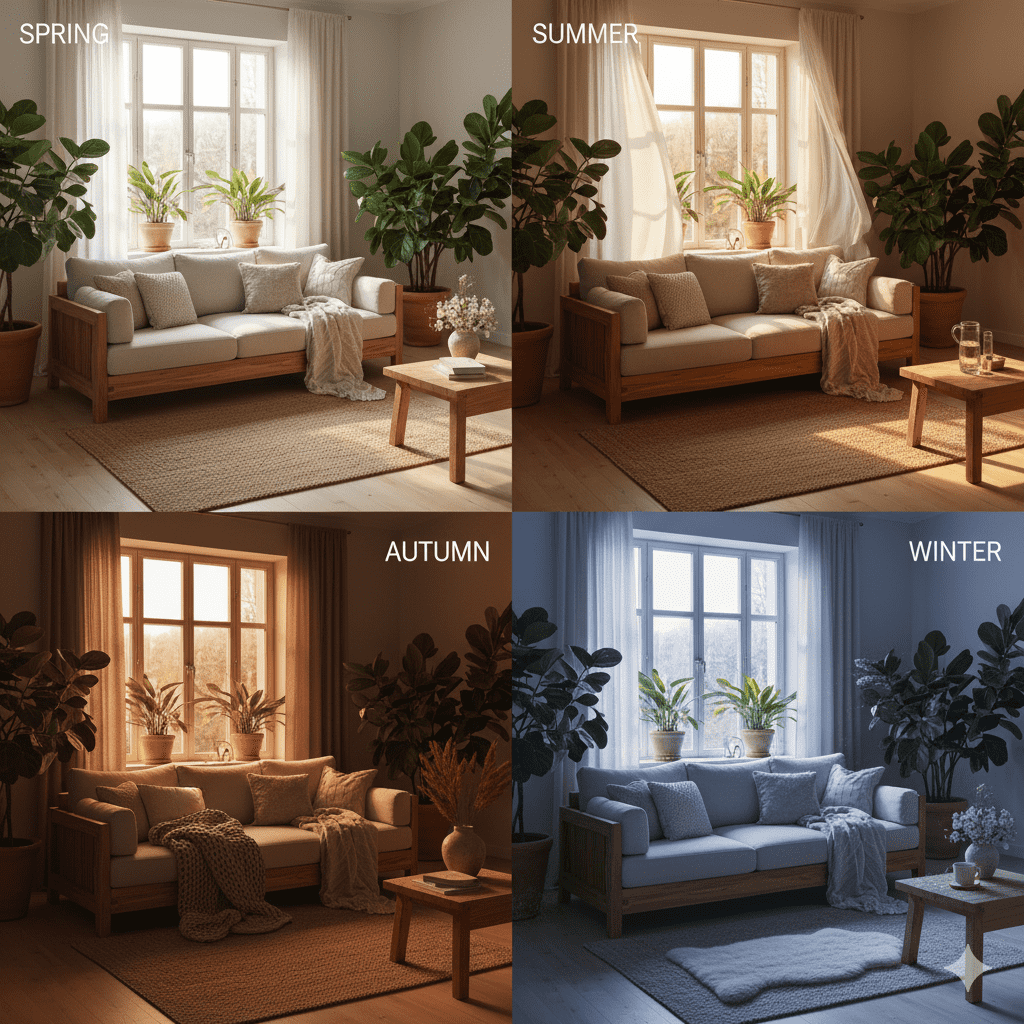
Our ancestors lived in profound connection with seasonal rhythms, their daily lives naturally aligned with nature’s cycles. Modern life, with its climate-controlled environments and artificial lighting, can disconnect us from these ancient patterns. Natural materials in our homes offer a bridge back to seasonal awareness and its accompanying benefits for our mental and physical health. Wood furniture becomes a barometer of seasonal change, expanding and contracting with humidity shifts that mark weather transitions. Far from being problematic, these subtle movements connect us viscerally to the world outside our windows. The slight creaking of wooden floors on dry winter mornings or the swelling of doors during humid summer evenings remind us that our homes are part of the natural world, not separate from it. Natural textiles shift with seasons in ways that synthetic materials cannot replicate. Linen becomes essential during summer’s heat, its loose weave and moisture-wicking properties creating comfort that air conditioning alone cannot provide. Wool emerges in autumn as both practical insulation and emotional comfort, its lanolin content naturally regulating humidity while providing the psychological warmth we crave as daylight diminishes. The visual changes in natural materials throughout the year create subtle but important psychological cues. Wood colors deepen during humid seasons and lighten during dry periods. Natural stone feels warmer in summer and cooler in winter, not just in temperature but in appearance. These variations help our circadian rhythms stay aligned with seasonal patterns. Maintenance routines for natural materials create seasonal rituals that mark time’s passage meaningfully. Oiling wooden pieces in spring, adjusting natural fiber textiles for summer breathability, preparing stone surfaces for winter’s lower humidity – these tasks connect us to our homes’ needs and nature’s cycles simultaneously. The aromatherapy effects of natural materials change seasonally too. Cedar furniture releases more scent during humid months, while pine and oak become more fragrant in winter’s dry air. These natural perfumes provide subconscious cues about seasonal transitions that synthetic materials simply cannot offer. Living seasonally through natural materials isn’t about discomfort or inconvenience – it’s about enriching our daily experience through deeper connection to the natural world that sustains us.
The Slow Furniture Movement: Quality Over Quantity in Modern Homes
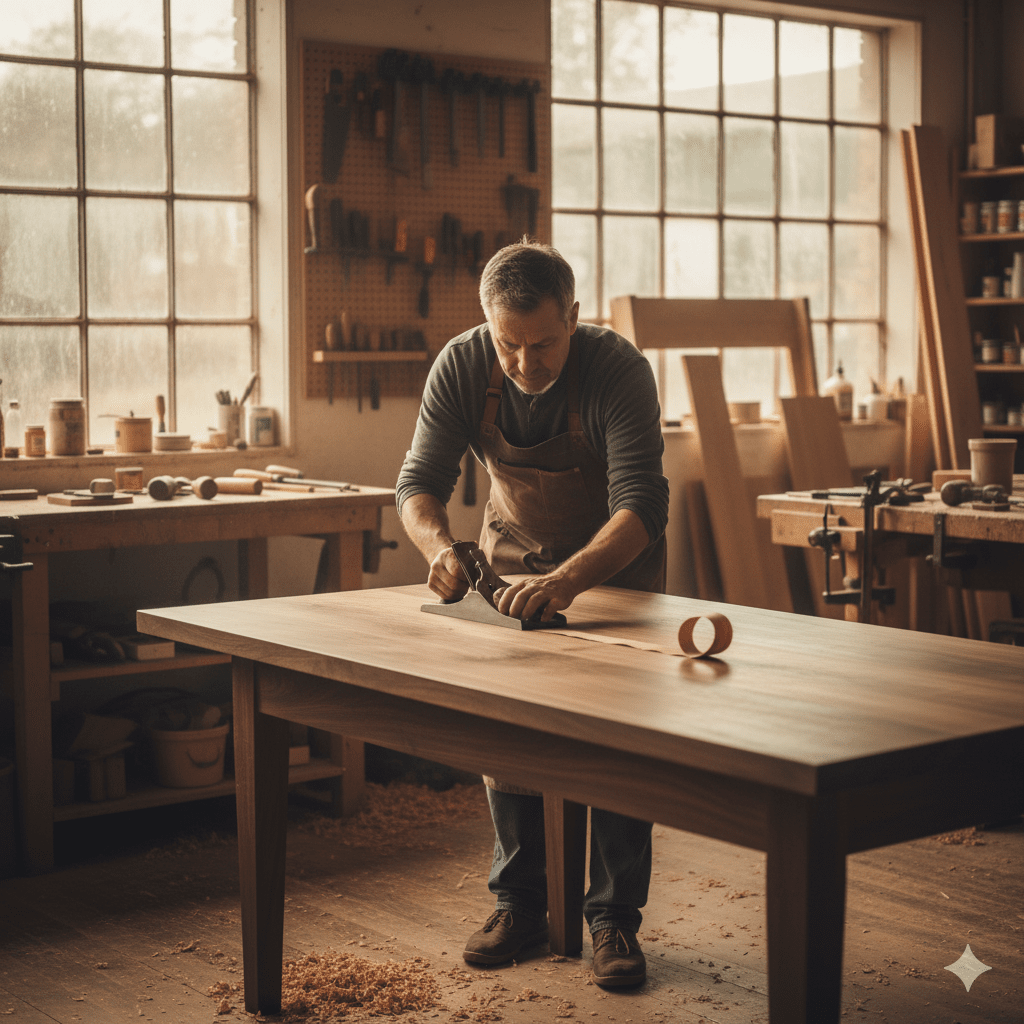
In a culture obsessed with fast fashion and instant gratification, the concept of slow furniture feels almost radical. Yet this approach to furnishing our homes – prioritizing quality, craftsmanship, and longevity over quick trends and cheap prices – offers profound benefits for both our wallets and our wellbeing. Slow furniture begins with a fundamental shift in thinking: viewing furniture as investment rather than expense. A handcrafted solid wood dining table might cost more initially than a flat-pack alternative, but it will likely outlast several cheaper replacements while growing more beautiful with age. The mathematics of quality become clear when calculated over decades rather than seasons. This philosophy demands patience, which itself becomes a form of mindfulness practice. Instead of furnishing entire rooms in weekend shopping trips, slow furniture encourages thoughtful acquisition over time. You live with spaces partially furnished, learning how you actually use each area before committing to pieces. This patience often leads to better decisions and more cohesive design. The emotional relationship with slow furniture deepens over time in ways that mass-produced pieces cannot match. Each scratch and mark on your handcrafted wooden coffee table tells a story – dinner parties, children’s homework sessions, quiet morning coffee rituals. These pieces become part of your family history rather than just functional objects. Craftsmanship appreciation grows naturally from the slow furniture approach. When you invest significantly in a piece, you develop understanding of the skills required to create it. You learn to recognize quality joinery, appreciate hand-finished surfaces, and understand the difference between genuine craftsmanship and mass-produced imitation. The environmental benefits compound over time. A slow furniture approach typically results in homes furnished with fewer, higher-quality pieces that last decades rather than years. The resource consumption and waste generation drop dramatically compared to the constant replacement cycle of fast furniture. Perhaps most importantly, slow furniture creates homes that feel deeply personal and authentic. Each piece is chosen deliberately, lived with intentionally, and valued genuinely. The result is spaces that reflect genuine taste and values rather than current trends or convenience shopping.
Small Spaces, Big Impact: Sustainable Design for Urban Living
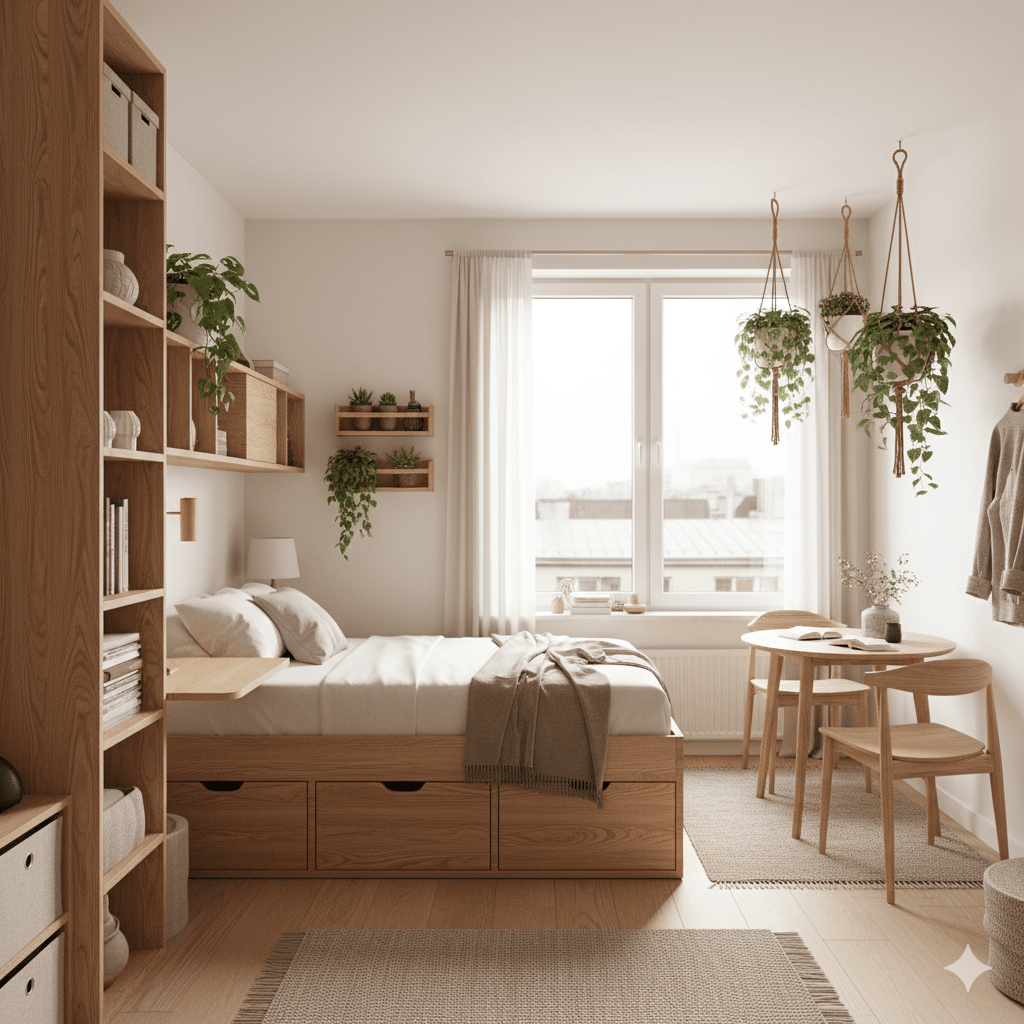
Urban living demands creativity, especially when you’re committed to sustainable choices in a compact space. The challenge isn’t just fitting everything in – it’s ensuring that every piece you choose serves multiple purposes while honoring your environmental values. Small spaces can actually amplify the impact of sustainable design decisions. The key lies in understanding that sustainable furniture often performs better in small spaces because it’s built for longevity rather than rapid replacement. A well-crafted wooden folding table serves dining, desk, and display functions throughout the day, while cheap alternatives would need replacing after months of such intensive use. Quality natural materials adapt to multiple roles gracefully. Vertical space becomes precious real estate in small homes, making solid wood shelving systems invaluable. Unlike metal or plastic alternatives, wood shelving can be easily modified, extended, or reconfigured as your needs change. The ability to sand, stain, and adapt wooden pieces means your storage solutions evolve with your life rather than becoming obsolete. Multifunctional furniture reaches its peak efficiency when crafted from natural materials. Ottoman storage in organic canvas holds blankets while providing seating and table surface when needed. Solid wood benches store items internally while offering dining seating and entryway perch functionality. These pieces work harder and last longer than synthetic alternatives. The visual tricks that make small spaces feel larger work even better with natural materials. Wood’s varied grain patterns create visual interest without overwhelming compact rooms, while natural fiber textiles add softness without the flat appearance of synthetic fabrics. The organic irregularity of natural materials prevents the clinical feeling that can make small spaces feel cramped. Perhaps most importantly, small spaces intensify your relationship with every object you own. When you’re living closely with fewer pieces, the quality of those materials matters enormously. Natural materials age gracefully in close contact, developing character rather than showing wear, making them ideal companions for intimate urban living.
The Neuroscience of Natural: Why Your Brain Craves Wood and Stone
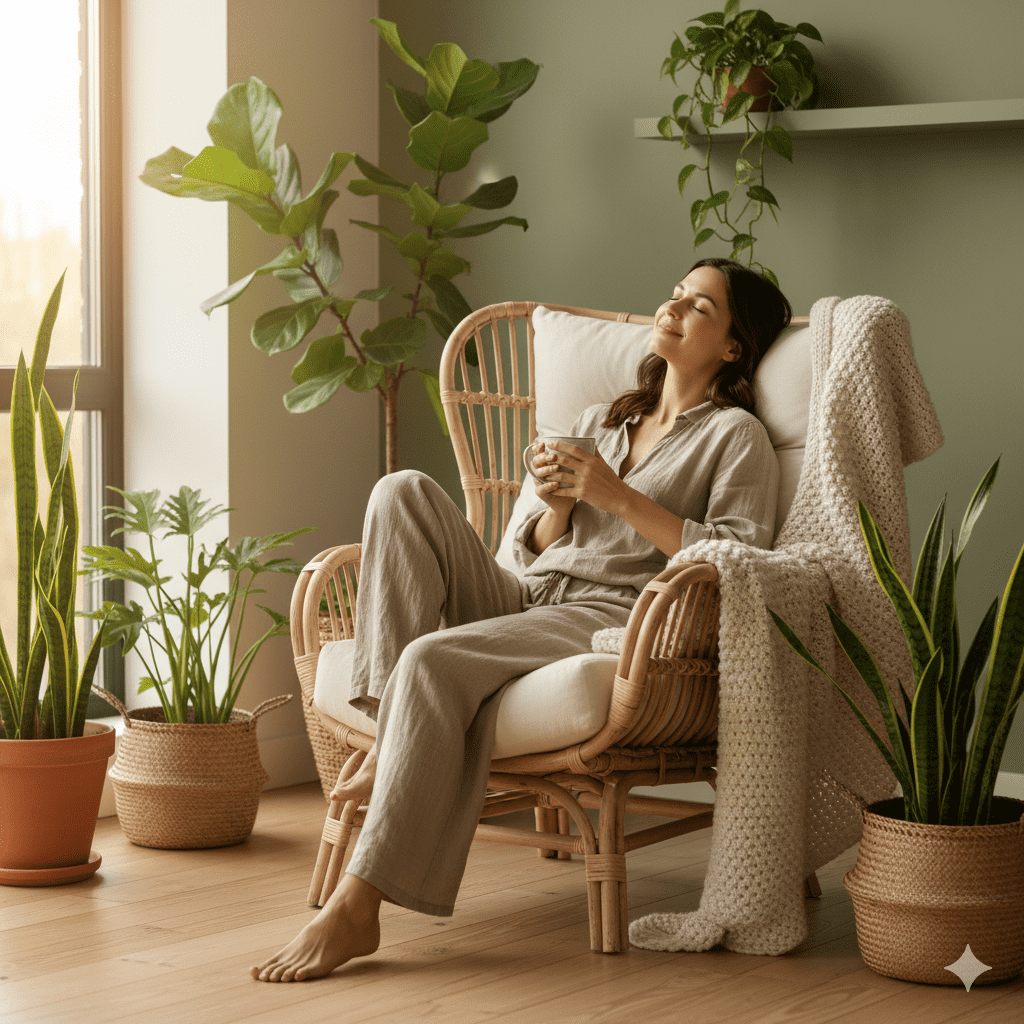
Our brains are ancient instruments navigating a modern world, and the disconnection shows up in subtle but profound ways throughout our daily lives. The synthetic environments we’ve created trigger stress responses that our ancestors never experienced, while natural materials activate neural pathways evolved over millions of years of forest dwelling. Recent neuroscience research reveals fascinating insights about how we process natural versus synthetic materials. When we see wood grain or stone texture, our brains recognize familiar patterns that require minimal processing energy. The irregular, organic patterns found in nature actually relax our visual cortex, while the perfect uniformity of synthetic surfaces requires constant cognitive work to process. Touch amplifies these effects dramatically. Running your hand along a wooden tabletop activates pressure receptors that send calming signals to your parasympathetic nervous system. The slight warmth and varied texture create a sensory experience that synthetic laminates cannot replicate. This isn’t imagination – it’s measurable physiological response. The thermal properties of natural materials play crucial roles in our comfort and stress levels. Wood remains warm to the touch because it conducts heat poorly, creating immediate comfort when we interact with wooden furniture. Stone and ceramic moderate temperature naturally, creating microclimates that help regulate our body’s comfort systems without conscious effort. But perhaps most intriguingly, natural materials seem to activate what researchers call “soft fascination” – the gentle, restorative attention we experience in nature. Unlike the “hard fascination” demanded by screens and synthetic stimuli, natural materials allow our minds to rest while remaining gently engaged. The implications for our homes are profound. Surrounding ourselves with natural materials isn’t just an aesthetic choice – it’s a neurological intervention that supports our mental health in ways we’re only beginning to understand. Every synthetic surface replaced with natural alternatives is a small gift to our overwhelmed nervous systems.
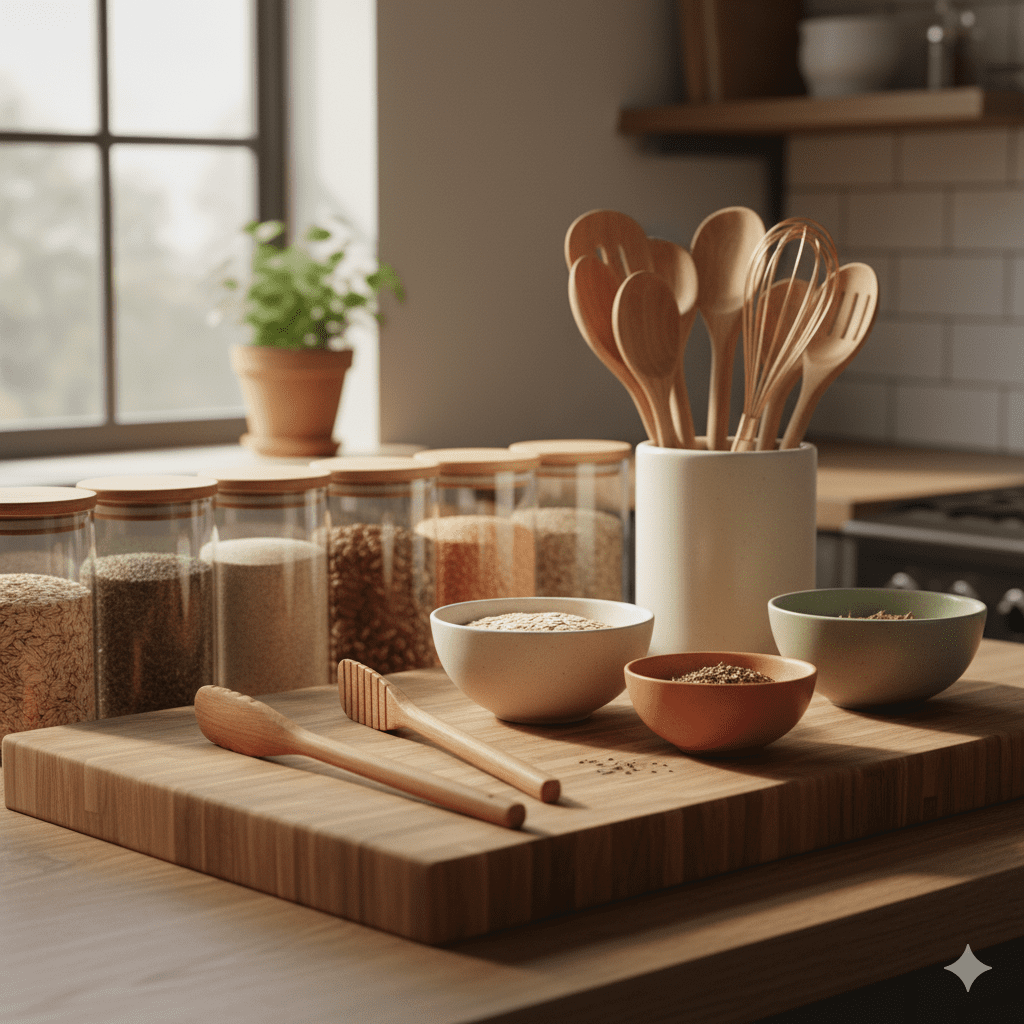
Beyond Plastic: Creating Sanctuaries in Every Room
The journey to a plastic-free home begins with a simple recognition: every synthetic surface in your house represents a missed opportunity for beauty, health, and connection to the natural world. This isn’t about perfection or extremism – it’s about making thoughtful choices that honor both your wellbeing and the planet’s. Your living room sets the tone for your entire home. Imagine sinking into a sofa upholstered in organic linen rather than synthetic microfiber. The difference isn’t just aesthetic – natural fibers regulate temperature and humidity, creating comfort that synthetic materials struggle to match. A solid wood coffee table grounds the space with weight and presence that particle board composite can never achieve. The bedroom, your most intimate space, deserves particularly careful attention. Natural latex mattresses breathe with your body’s temperature fluctuations while organic cotton sheets soften with each wash rather than degrading. The wooden bed frame ages gracefully, developing character that synthetic alternatives can only simulate. Kitchen transformations often yield the most immediate health benefits. Glass storage containers eliminate concerns about chemical leaching while bamboo cutting boards are naturally antimicrobial. The tactile pleasure of wooden utensils connecting with ceramic bowls creates a sensory experience that plastic simply cannot provide. Bathrooms challenge us to rethink convenience culture. Bamboo accessories bring warmth to spaces typically dominated by cold synthetics, while organic cotton towels prove that luxury and sustainability aren’t mutually exclusive. The switch to solid soaps and shampoos eliminates dozens of plastic containers annually while often providing superior performance. Each room’s transformation builds momentum for the next. The visual coherence of natural materials creates flow throughout your home, while the cumulative health benefits of reduced chemical exposure become increasingly apparent. This isn’t just about eliminating plastic – it’s about creating spaces that actively contribute to your wellbeing.
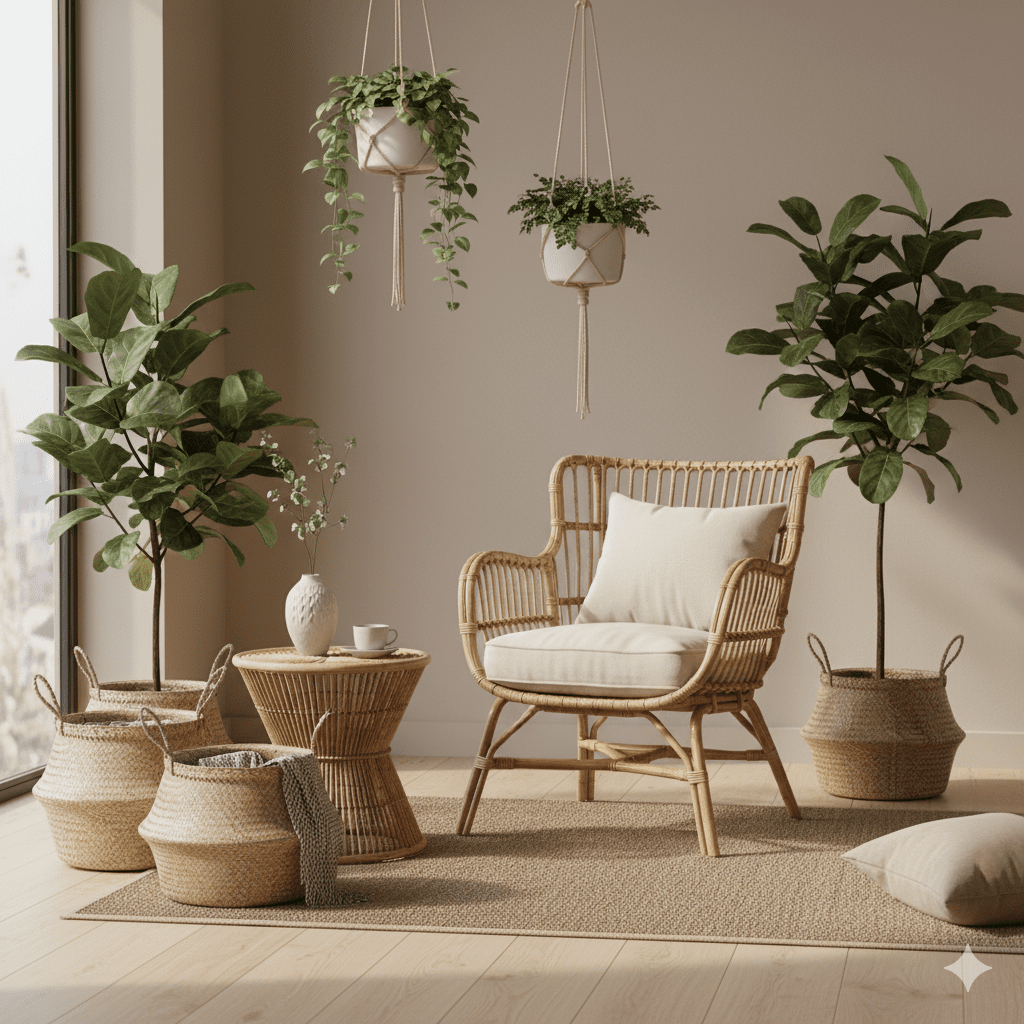
The Rattan Renaissance: Why Ancient Materials Are Modern Solutions
In our rush toward technological solutions, we sometimes overlook the sophisticated wisdom embedded in traditional materials. Rattan, woven by skilled hands for centuries, offers a masterclass in sustainable design that modern manufacturing is only beginning to understand. The rattan vine grows with remarkable intelligence, strengthening forest ecosystems while providing renewable harvest opportunities. Unlike trees that take decades to mature, rattan can be harvested within years while the root system continues supporting forest health. This isn’t just sustainability – it’s regenerative agriculture that leaves ecosystems stronger than before. But rattan’s environmental credentials are only part of its appeal. There’s something deeply satisfying about furniture that responds to your body and your environment. Rattan breathes with seasonal changes, remaining cool in summer heat and warming naturally to your touch. The gentle flex in a well-made rattan chair provides ergonomic support that rigid synthetic materials simply cannot match. The craftsmanship required for quality rattan work represents generations of refined technique. Master weavers understand how to select vines for strength and flexibility, how to achieve joints that will hold for decades, and how to create patterns that aren’t just beautiful but structurally sound. This knowledge can’t be replicated by machines – it lives in human hands and minds. When rattan ages, it tells stories. The slight darkening of frequently touched areas, the way certain sections develop character marks – these aren’t flaws but evidence of a life shared with humans. Synthetic alternatives attempt to mimic this aging process but can only simulate what natural materials experience authentically. Perhaps most importantly, choosing rattan connects us to global communities of craftspeople who depend on traditional skills for their livelihoods. Every piece represents not just environmental responsibility but social sustainability – supporting human knowledge and economic systems that honor both people and planet.
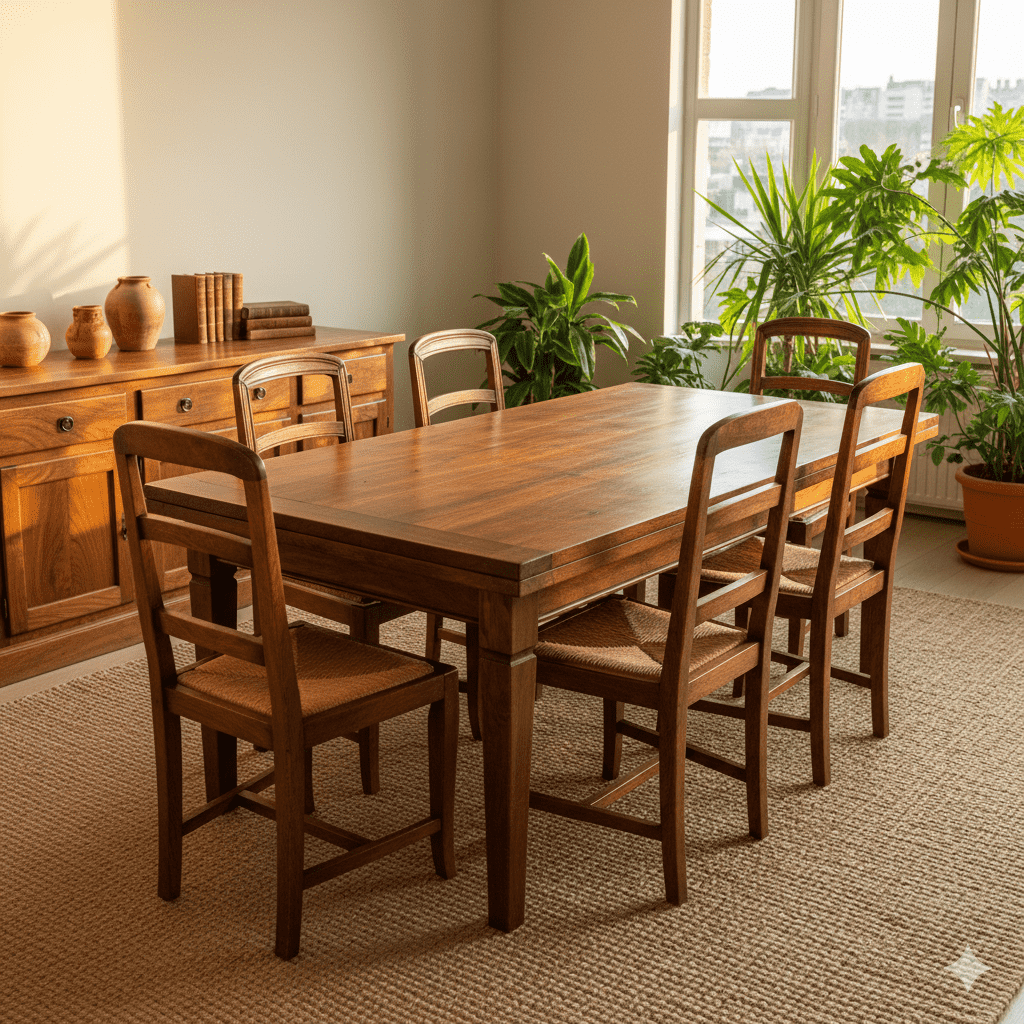
The Art of Loving Your Wood: A Gentle Approach to Natural Furniture Care
Caring for natural wood furniture is less about following rigid rules and more about developing a relationship with living materials. Unlike synthetic surfaces that demand harsh chemicals and aggressive cleaning, wood responds to gentle attention and understanding of its natural rhythms. Wood breathes, expands, and contracts with the seasons, much like we do. In winter’s dry air, your wooden dining table might develop tiny cracks that disappear when humidity returns. This isn’t damage – it’s conversation. Learning to read these subtle communications helps you provide exactly what your furniture needs to thrive. The daily ritual of dusting becomes meditation when you work with the grain, feeling the texture beneath your cloth, noticing how morning light catches the patterns that make each piece unique. There’s something profoundly grounding about this tactile connection, a reminder that you’re caring for something that was once part of a living forest. Seasonal care deepens this relationship. The ritual of oiling your wood pieces becomes an opportunity to examine and appreciate each surface, to notice how the wood has evolved and aged beautifully. Quality natural oils don’t just protect – they enhance the wood’s inherent beauty, bringing out depths of color and grain that synthetic finishes mask. When accidents happen, and they will, natural wood forgives in ways that synthetic materials cannot. Water rings can be gently massaged away, minor scratches can be sanded and re-oiled, and even significant damage can often be restored by skilled craftspeople who understand wood’s forgiving nature. The key is patience and consistency. Natural materials reward gentle, regular attention rather than sporadic intensive cleaning. A few minutes of mindful care each week creates furniture that doesn’t just last decades – it becomes more beautiful with each passing year, carrying the patina of a life well-lived.